
 By
By 
Have you ever wondered what happens after a customer clicks the “buy” button on your website? That order does not magically arrive at their door. Behind the scenes, a fulfillment center plays a major role in turning an online purchase into a real package delivered to a customer’s home. A fulfillment center is the heart of modern e-commerce, making sure products move quickly, safely, and correctly from storage to shipping.
What Is a Fulfillment Center?
An ecommerce fulfillment center is a type of warehouse that focuses on processing customer orders from start to finish. Its main job is to receive products, store them properly, manage inventory, prepare orders, and ship items to customers. Some fulfillment centers serve only one company, while others handle products for many different businesses, including online shops, direct-to-consumer brands, and companies with large order volumes.
Unlike traditional storage warehouses, fulfillment centers are active spaces. Products move in and out constantly, often within days or weeks. The goal is speed, accuracy, and customer satisfaction.
How a Fulfillment Center Operates
The work inside a fulfillment center follows a clear and organized flow. First, products arrive from manufacturers or suppliers. These items are checked, counted, and recorded into the system. Important details like product type, quantity, and storage needs are noted.
Next, items are stored in areas that make picking easy and fast. Some products need special conditions, such as temperature control or careful handling. When a customer places an order, the system sends the details to the fulfillment center. Workers or automated systems then locate the item, pick it from storage, pack it carefully, and label it for shipping.
Finally, the package is handed over to a delivery carrier. Throughout this process, inventory levels are updated in real time so businesses always know how much stock they have left.
Fulfillment Models, Trends, and the Future of Order Processing
Not all businesses handle fulfillment the same way. Companies choose different fulfillment models based on size, budget, and customer needs. At the same time, the fulfillment industry continues to change as new tools and methods are introduced.
Fulfillment Center vs. Warehouse
The main difference between a fulfillment center and a warehouse is purpose. A warehouse mainly stores goods for long periods. A fulfillment center focuses on preparing and shipping customer orders quickly.
Fulfillment centers offer services such as picking, packing, labeling, kitting, and returns processing. Their layout is designed for fast movement, with clear zones for each step of the order process. Warehouses, on the other hand, focus on saving space and keeping products stored safely until they are needed.
Types of Order Fulfillment
There are three common ways businesses manage fulfillment:
In-House Fulfillment
This is when a company handles everything on its own. It gives full control over storage and packing but requires high costs, staff, and space. It can be difficult to scale during busy seasons.
Outsourced Fulfillment
In this model, a third party runs the fulfillment center. This option lowers startup costs, allows faster scaling, and provides access to advanced systems. The trade-off is less direct control over daily operations.
Hybrid Fulfillment
Hybrid fulfillment combines both methods. A business may fulfill fast-moving products in-house and outsource others. This approach offers flexibility but requires strong coordination to avoid confusion.
New Trends in Fulfillment Centers
Fulfillment continues to grow and change as customer expectations increase. One growing trend is shared warehouse space, where multiple companies use the same building but manage their own orders. This lowers costs and allows businesses to operate in more locations.
Another trend is virtual warehousing. This uses software that lets companies track and manage fulfillment activities remotely, even if they do not control the physical space.
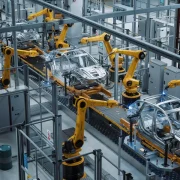
Automation is also becoming more common. Robots and automated systems help pick, pack, and move products. These tools reduce errors, improve speed, and allow fulfillment centers to operate around the clock.
Final Thoughts
Fulfillment centers are a vital part of today’s e-commerce world. They help businesses deliver products faster, manage inventory better, and meet customer expectations with ease. Whether fulfillment is handled in-house, outsourced, or through a hybrid model, choosing the right approach can strongly affect business growth.
As technology continues to improve and online shopping expands, fulfillment centers will remain a key part of successful, customer-focused operations.











Comments